Thursday, 31 July 2014

#8 Franz Ferdinand's assassination is a compelling story in itself

        
Archduke Franz Ferdinand


I've always known that Franz Ferdinand's death triggered World War One, but didn't know much more about it.  I'm currently planning some reading resources on the war for my class in September, and have been intrigued by the story.

In 1914, Europe was a cauldron of tension and fear as the dark clouds of war loomed on the horizon. The cauldron reached boiling point when Archduke Franz Ferdinand, the heir to the throne of Austria-Hungary, was assasinated in Bosnia. Historians often focus on the complex set of events that followed, as various countries became involved in a war. The assassination itself, however, was a daring and bold mission that often gets overlooked.
        In spring 1914, Danilo Ilic carefully co-ordinated an assassination that would change the course of history. The Serbian recruited six others to kill Franz Ferdinand because they didn’t want Bosnia to be part of Austria-Hungary. Instead, they wanted Bosnia to be with Serbia in a new country called Yugoslavia. Using intelligence from a number of sources, Ilic learned that Ferdinand would visit Sarajevo in Bosnia at the end of June along with his wife, Duchess Sophie. He smuggled his team into Bosnia and provided them with false identities. As well as his fellow assassins, Ilic received a stash of weapons. These had been hidden in a large crate of sugar which was taken to Sarajevo. In the box were six hand grenades and four Browning automatic pistols and ammunition. There was also money, suicide pills and a map with showing the location of sentry points and a secret escape tunnnel.
        On 28th June 1914, Ilic positioned the six assassins along the route of a motorcade that Franz Ferdinand was due to travel along later that day. Amongst that team was a Serb called Gavrilo Princip.
 
Gavrilo Princip

        Despite the importance of the visit, security was limited in Sarajevo that day. Only sixty police officers were tasked with protecting the Archduke’s motorcade. This made it ideal for Ilic to carry out his plan. The vehicles passed the first assassin, who was armed with a bomb. He failed to carry out his duty. The second assassin had a pistol and a bomb. He too failed to act. At 10:10am, the car carrying Franz Ferdinand and Sophie approached assassin number three: Nedeljko Cabrinovic. This time, the assassin threw the bomb, but it bounced off the canopy of the car and blew up the car behind instead, wounding more than a dozen people.
         The remainder of the motorcade sped away quickly to the Town Hall. The cars travelled so fast that the final three assassins, including Gavrilo Princip,  were not able to carry out the plan. At the Town Hall, Franz Ferdinand was greatly distressed. “Mr Mayor, I came here on a visit, and I get bombs thrown at me. It is outrageous!” That said, Ferdinand and Sophie wished to visit the injured in hospital. This would prove to be a fatal decision.


         Gavrilo Princip knew that the planned assassination had been unsuccessful so took a chance on the Archduke’s next move, waiting beside a nearby delicatessen. Sure enough, the motorcade travelled towards him. The driver of the car stopped right in front of the shop. Princip knew this was his one and only chance. Stepping forward, he fired two shots from a distance of about 1.5 metres. The first hit the Archduke in his jugular vein; the second inflicted an adominal wound on the Duchess. Both remained seated upright, but died on the way to receiving medical treatment. His last words were “Sophie, Sophie! Don’t die! Live for our children!” followed by several utterances of “It is nothing.”
         So what happened to the assassins? A trial was swiftly set up in Sarajevo in October 1914. Danilo Ilic was sentenced to death and executed by hanging, along with one of his conspirators. The other six, including Gavrilo Princip, received prison sentences ranging from 10 to 20 years. Their sentences were so lenient because they were seen as unwilling participants in the killing, and were forced into it by Ilic. Princip died of tuberculosis in prison.

The trial. Princip is seated in the centre of the first row.

What happened next? Well, we know a bit more about that - and we'll all know plenty more in the months to come I'm sure.
For Guided Reading resources on the Great War, check out my store in the coming weeks. There will be some free resources, and more in depth resources which can be purchased.


Thursday, 12 June 2014

#7 The World Cup should be celebrated in the classroom.


It's June 1990. I am emerging from the newsagent with my pack of World Cup '90 stickers. The sun is beating down on this glorious June morning as I walk the short distance to school. I open the pack carefully. Could this be the one? Toto Schillaci. Got. Tomas Skuhravy. Got. Baggio. Got. Matthaus. Got. Tony Dorigo. Got. But there's one left, and it's a foil sticker...a shiny. It's Cameroon! A need! One need, five swaps, another 20 pence spent. Another pack tomorrow...


The Panini World Cup sticker album fills many people of my age with nostalgia, so much so that their target audience is probably men in their mid-thirties as well as children. Not that teachers are too happy about it. One school has banned the stickers after fights broke out in the playground. Not me. We have our class copy of the World Cup sticker album, and the entire class are buying stickers and exchanging swaps. We hope to fill the album...but we still need the Cameroon shiny.

Italia '90 was the World Cup I fell in love with. It was Gazza and his tears that did it for me. He showed that it was OK for a grown man to cry on the sports field. In that moment that Gazza became aware of what he's lost, a nation had a new footballing hero. I often wonder how strange it must seem to others, that a hero was made as a result of tears. We played football after school every day for that entire month.


Mexico '86 is also in my memory. The grainy pictures on TV. David Coleman's commentary. The hand of God. Maradona...best footballer in the world? Or a villain who should never have been allowed on a football pitch?

We've been looking at heroes and villains from the World Cup as part our Guided Reading. Pele...Bobby Moore...Joe Gaetjens (the American who scored against England in 1950). The children enjoyed deciding who were the good and bad guys, and for players like Maradona and Zidane, there was a great deal of debate. We've also been looking at the chances of the major nations in the World Cup with the reading resource. It's helped to get the whole class enthused about the month of football ahead!

To see my World Cup Guided Reading resources, click here.


But it's in maths where I may have created a monster. My fantasy football game is taking the school by storm! Children have to pick five England players with a budget of £40 million, and see how they score in the World Cup. As well as testing mental arithmetic, we will use the scores as part our data handling topic.

So the World Cup can be used successfully and justifiably in the classroom. And as for wet playtimes, there's always penny football. If you want the rules for that one, you'll have to message me...

Check out the resources mentioned above on my store. 

Enjoy!


Sunday, 4 May 2014

#6 It's NOT all about the children

SATS. The very word fills most people in schools with a resigned sense of dread.

As an NQT, I couldn't believe it when I was offered a role as Year 6 teacher, helping children through this crucial stage of their education. It was a great massage for my ego. Now, with one week to go, I would prefer to retreat to the safety of teaching in a year further down the school.

This week, I have seen several children in tears and spoke to a number of concerned parents who are worried about what the prospect of the SATS are doing to their children. A sense of impending doom is prevalent amongst some in the staffroom, and I am spending my Bank Holiday weekend feeling tired and run down.


It's no surprise. During the week, the children have been either revising excessively or taking tests. Often the tests don't reveal what the teacher wants or needs them to, and so the stress levels rise. The children, the vast majority of whom wish to please their teacher, feed off this stress. Consequently, the classroom can become a very emotional place. It takes a special teacher to keep a classroom calm at this time of the year!


I've been asking myself the question, "What is all this for?"


Is it for the children? Well, yes, to an extent. It may be preparing them for testing in High School. It may be furthering their knowledge. It may ensure that they are being taught what they should have been. But once a child leaves primary school and enters High School, what has all of this taught them? They have been in school lessons for the last six years. They know the curriculum. The crucial difference is that some children can retain information. They will thrive. Those that can't will crumble.


Is it for the teachers? Yes, much more so. Future contracts can depend on good results. Headteachers can hold back pay if they deem results not good enough.


Is it for the schools? Absolutely. If children aren't gaining Level 4s, this can be seen by everyone in the school league tables. Since these are usually the first thing that's looked at to judge the effectiveness of a school, the SATS results have got to be good.


The government has created a system that perversely puts children last of all. They are simply pawns in a political game where Britain aspires to prove it's greatness against the more rigid and seemingly successful school systems of Singapore, Finland et al.


Some schools are taking this so seriously that their Year 6's are going in this weekend, on a Bank Holiday, for extra revision.


When I was at school, I can't remember being tested heavily. I didn't know my levels. I knew I was on the brighter side of my class, but there was no sense of competition, no pressure like there is today to succeed. People argue that children need to experience this pressure as that is what life is like in the real world, but surely not at 11-years old?


Sometimes I wish our school system would allow children to be children. There must be an alternative to this rigorous testing.


Tuesday, 29 April 2014

Schools aren't as safe as we'd like to hope

#5 Schools aren't as safe as we'd like to hope


At this time yesterday morning, she would have been preparing for a new week in school. No doubt she would have been going over her lessons for the day. Reminding herself to photocopy the homework. Have a word with the Year 6 child about the work he'd struggled with. In the back of her mind she may have been preparing for half term, perhaps a holiday to look forward to. Maybe she was thinking ahead to retirement, surely not too far away, and receiving her well-earned pension whilst spending her time with those that she loved.

 Nothing could have prepared her for what lay ahead. 

Anne Maguire's tragic death has horrified and spread fear among teachers everywhere. Whilst now is the time to pray for her family and those that witnessed this terrible incident in Leeds, you can guarantee that in the medium term, there will be national calls to tighten security in schools; and that unions will use this event to demonstrate the pressure that teachers face in the classroom.

As a primary school teacher, I do feel safe. I feel in control. I feel strong. In a secondary school, the children are a lot bigger, a lot stronger. If I taught in a secondary school, this morning I would feel a little less safe. It's not the knives that I'd be worrying about...it's everything else that children bring to school.

Put it like this. Here is a system that throws together several hundred children each day. Each one has witnessed different things around the breakfast table, or perhaps the night before. Arguments. Laughter. Domestic abuse. Love. Graphic language. Nurture. Abuse. A good proportion will have returned from school the previous day and spent the time in between in front of a screen, watching TV that is unsuitable for them or playing ridiculously lifelike games that parents bought to keep them quiet. They have not been socialising with their peers. They have been shooting, killing, even performing acts of a sexual nature on a computer. They have been accessing hardcore porn which is so prevalent on the Internet. Their worldview is shaped by such things. Their relationships are shaped by such things. And so often, they don't have a clue about the consequences of their actions in the real world.

And so, to lessons. Crammed in a hot classroom, sitting closely to someone you don't like. The pressure of exams and tests. Black children, white children, Christians, Muslims, boys, girls. Teachers. Children. Friends. Enemies. Us. Them.

Snap.

This morning, two lives have been ruined. A 15-year old boy who is currently in police custody and a 61-year old teacher who paid the ultimate price in a career where there should never have been a price to pay.

Schools aren't safe places. What can we change? More security? Police on site? CCTV in every classroom? Stab vests for teachers?

No. It's too much. All we can do is teach good values, to parents and children. Teach about consequences. Teach against violence. It may not be enough, but I'm a teacher, not a security guard.

RIP Anne Maguire.

Saturday, 26 April 2014

Never save cutting and sticking until the end of term

#4 Never save cutting and sticking until the end of term


With a hectic school schedule, and short lesson times, the temptation is to wait until the end of term for the children to glue everything into their books.

Don't do it. Just don't. It will be chaos. Their books will look like a result of the Big Bang. And the cleaners will hate you.


The best books have a happy ending.

#3 The best books have a happy ending

If you read just one book to your Year 6 class, make it this one.

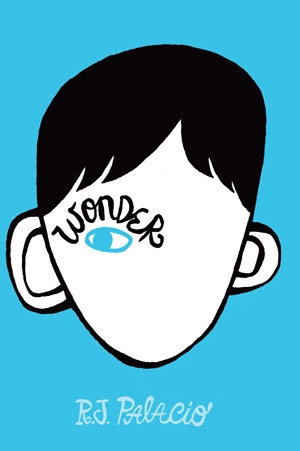
'Wonder' by RJ Palacios is an emotional rollercoaster. It follows the story of a  child with Treacher Collins Syndrome. Children who have this condition have facial deformities.

August, the central character, just wants to lead a normal life, but he can't because of the way others view him.

Without giving too much away, this is a story about  a family's love, a boy's courage, bullying, friendship and being different. It's a story that touches on human emotions in incredible ways. 

Using the slogan, 'You can't blend in when you're born to stand out', this book celebrates our differences but makes us feel deeply uncomfortable about the times when we have judged others because of the way they look.

We laughed. Some of us cried. I choked up on several occasions as I read out loud. And all the while, I couldn't see how things could turn out well for this kid. 

Thankfully, I was wrong.

Don't judge a book by it's cover. Don't judge a person by their face.

Read it!

Tuesday, 15 April 2014

Meat is Murder

#2 Meat is Murder


Morrissey is a famous vegan. As a big fan of his,
I've still found some of his rants quite amusing. Until now.
A circle time discussion of class pets was meant as a light-hearted way of getting to know the kids better. We had several dogs, cats and rabbits. We had a hamster and some budgies and a number of goldfish. And Chloe had a pig.

"A pig? That's a bit different. Where does it live?"
"In the garden," she replied.
"Why do you have a pig, when everyone else has dogs and cats?"
"So we can eat it," she replied as if this was a stupid question.

The class looked horrified. I looked horrified. In my shock, I moved swiftly on to teaching subordinate clauses, trying desperately to get the image out of my head of Chloe with a bolt-gun to the head of an unsuspecting Percy Pig.

My own attitude to eating meat is anything goes, as long as I don't see it alive beforehand. My visit to Korea, for example, still haunts me. At a fish market, my friend chose a fish for our tea. It was swimming in a tank with others. The fish seller, grabbed it from the tank, killed it with a fatal blow and then sliced it before our eyes. There was no need to cook it...it was still warm. Then there was the time I went sea fishing off Bridlington. I caught about a dozen mackerel. Back home, they remained in the freezer for months. I couldn't bring myself to eat something that had been happily going about it's life in the North Sea before I put an abrupt end to it.

What a waste.

Recently, I've read a book that has changed my attitude. 'Eating Animals' by Jonathan Safran Foer opened my eyes to the appalling conditions that animals on factory farms contend with. It gave evidence on the pain and stress they endure, which were beyond what even a depraved imagination could comprehend. It also gave some alarming statistics about the dangers posed by contaminated meat entering the human food chain, something which occurs every second of every minute of every hour of every day.


"We know, at least, that this decision will help prevent deforestation, curb global warming, reduce pollution, save oil reserves, lessen the burden on rural America, decrease human rights abuses, improve public health, and help eliminate the most systemic animal abuse in world history."


Mostly, this book made me ask questions. Can I justify eating a creature whose only purpose in a painful and inhumane existence was to feed me for just one meal? 

Whilst it wouldn't turn me to vegetarianism, this book has made me question where my meat is coming from. I want to know that my meat has enjoyed life before its slaughter. I want to know that it was slaughtered as humanely as is possible. I want to know exactly what vitamins and nutrients it was fed in its diet.

There will be a price to pay. Organic meat is more expensive (and let's face it, there has to be a reason why meat is cheap compared to in the past), but perhaps we eat too much meat anyway?

So this book has changed the way I think. It's the reason why I regret not doing anything with the mackerel I caught. It's the reason why I will happily eat the carcass of lamb that a nearby farmer gave to us recently. Finally, it has made me see that Chloe was right after all.

Monday, 7 April 2014

Tuesday, 1 April 2014

April Fool

#1 Some word problems are impossible.


April Fool's Day. Can teachers join in? Is it permissible to fib to your class for one morning, for the sake of entertainment? Well, we do it for Father Christmas and the Tooth Fairy, so on that basis, I decided to set my top set maths class an impossible question:

My maths set love a challenge. I convinced them with some 'Higher Order Thinking Skills', it could be done. Every one of them started writing calculations on whiteboards. Various strategies and methods were used. One table were convinced that it was to do with the area and perimeter of a compound shape. Only one child, a Chinese boy with a keen eye for maths and an even keener eye for logical thinking, didn't attempt it.

After fifteen minutes of hard work, my bright maths set explained their answers in great detail. Several of them had got the same answer of 28. A few others chose 3. A handful had gone into algebra. When I revealed the true answer, I was greeted by blank and confused faces. Only then did it twig with one of them. The others laughed. I laughed. The Chinese boy continued to look confused. It took me another fifteen minutes to explain the concept of April Fool's Day to him.

Despite my amusement, I felt slightly bad that I had exploited the good nature of my maths set. It did make me think though, that teachers get away with telling a fair few lies in the nature of their profession.

Here's one example: My eldest daughter, 5 years old, came home from school last week and said, "Daddy, Mrs A can see through walls."
My ears pricked up. "Really?"
"Yes," she replied. "She can see into the cloakroom and outside."
"Does she see good things as well as bad things?" 
"Yes. But mostly bad things."

Lesson of the day: Tell the truth in all circumstances. But remember that a little bit of creative embellishment can make for a happier - and more entertaining - classroom environment.