Saturday, 14 November 2015

Hope not hate


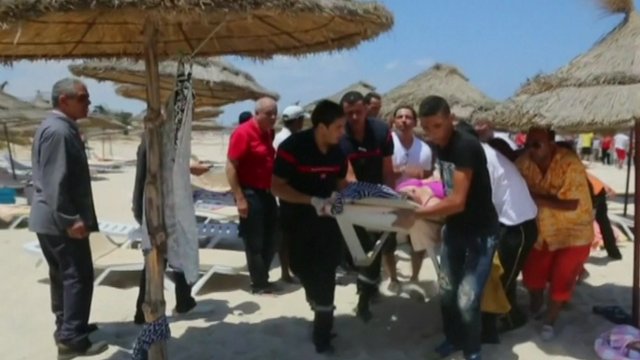
"When will there be another World War, Mr Townend?" a child asked me yesterday. His question was clearly spurred on from a week of Remembrance activities where there has been much talk of WW1 and WW2. Added to that, we joined in the national minute's silence to remember the victims of the Tunisian beach massacre earlier in the year, and more recently, bowed our heads in silence during assembly to think of the victims of the plane crash in Egypt.

With that in mind, his question was very reasonable. Another child had asked "When will the Germans attack us again?" To an adult, such a question sounds ridiculous, but to a child, it is a perfectly logical thing to enquire about. In their understanding of movies and game sequels, we've had World War 1 and World War 2, so surely the third instalment can't be too far round the corner.

We spent some time watching the Sainsbury's advert from last Christmas - the Christmas Truce, where the British and German soldiers met in No Man's Land on Christmas Day to play football and exchange gifts. I pointed out that the German soldiers were the same as the British - innocent, young boys who didn't have a clue what they were letting themselves in for when they followed the orders of their superiors. I also told them that the story proves that even in the depths of despair, darkness and depravity, hope and love can shine through.

"There will not be another World War." I reassured him. "We live in a very different world now. In this country, we are safe."

This morning I switched on the news to see that 130 people had been killed by terrorists in France -  a country just thirty or forty miles of water away from my own, A country with highly advanced intelligence and security systems, like my own. A  country with similar values to my own. What's more, there wasn't just one attack - there were several co-ordinated acts of terror, and not one of them was thwarted.

"We are safe." I had said. Do I believe that today?

Children in primary schools have a lot of questions to ask. Many parents try to shelter them from the brutalities of the world, with good reason, but there is no escape from the truth in the classroom or in the playground. 

As a teacher, I have always seen my role to educate, not in a purely academic sense, but in a more 'holistic' way (to coin an over-used word in education circles.) That means talking openly about the problems and issues in the world to create a greater understanding and tolerance of all people, colour and creed - a message of hope, not hate.

My own class is 100% white British, which has its challenges. The world's issues may seem quite distant to some children. Others may be heavily influenced by unhelpful opionions of parents. 

I sometimes wonder how different my approach would be if I taught in an inner-city school in Birmingham or Bradford. Those teachers are on the front-line between hope and hate. There are forces at work that are trying to brainwash innocent children into being martyrs for a hopeless cause that incites violence and hatred. Those very same forces are responsible for the massacre in Tunisia, the carnage in Paris, and probably the plane crash in Egypt.

My message as a teacher, to educate those children, would be this:

Your faith is a force for peace in this world. Your religion and its teachings inspire so many people to share love and hope with a world that needs it. Whatever direction your life takes, make sure you choose to love, not hate. We all depend on it.



Tuesday, 14 July 2015

A blog to my Year 6s

Here is a blog post I have written to my Y6s on our Kidblog.org account. I wrote it straight after our Y6 production of Joseph and his Amazing Technicolor Dreamcoat. For me this achievement was far more impressive than their excellent SATS results.

________________________________________

Hi everyone.

I'm writing the morning after a night that I will never forget.

To say people were proud of you is a massive understatement. Your parents love you, and whatever positive things you do at school and in your life, they will always be proud of you. But last night you put on a performance that, given your age, would have made Andrew Lloyd Webber himself proud.

And as for your teachers and staff - you may feel at times that we nag you or get on your back but remember this - each and every one of us cares for you as individuals and we want you to achieve the very best that you can. Last night you did that - you put on a complex and technical West End production that in parts wouldn't have looked out of place on the professional stage. And you made it your own. And you're 10 and 11 years old!

For me, your production brought back many memories of when I used to act as a child. In fact, your performance was truly on another level compared to anything I've been in myself. But as a director, I have enjoyed every minute of this. I have been singing along to every song; I have been going through all of the emotions in the play; I have laughed and I was very close to crying. Very close! So thank you for the gift you have given me. You pushed beyond your comfort zone. You learned to sing. You learned to dance. You learned to act. You were patient. You were never satisfied when you knew you could do better. You were amazing. It is a gift that I, along with everyone in that hall will hold in their hearts for a very long time.

It would be impossible of me to pick out individuals because it was a show that involved everyone for the duration. You were never out of the gaze of the audience. But I did watch the audience through the show. Needless to say, there was a sea of proud parents and grandparents wiping their eyes, genuinely moved to tears by your performance. There was much laughter. There was a parent who punched the air with her fist every time her daughter said a line. There was a certain Pharaoh's parents who turned around to me in stunned disbelief!

And of course there was a standing ovation - and that's never happened.

So now as we move on, and Joseph becomes Hollie, and the King becomes Max once more, always remember - you rocked it last night. You have all grown so much in confidence as well as talent and you put on a performance that none of us would have dreamed you could do three months ago.

In a few short weeks, you'll be leaving your cosy surroundings at Barlby CP and taking your next steps in the world as you go to high school. As you take that step, you can hold your heads high and know that you can achieve anything. You have showed us that in the most extraordinary way.

Monday, 13 July 2015

#24 Children are worth more than a piece of paper

Today we sent home our reports. And with them...SATS results.

In my class, the children broadly fell into 4 categories.

The majority worked hard and got the results they deserved.

A very small minority didn't work hard (despite high levels of support) and got what they deserved - poor results.

An even smaller group didn't work as hard but managed to pull off good results against my expectations.

Finally, some children worked hard but didn't  get the grades they were aiming for.

It is this final group who I feel for the most. The truth of the matter is, some children test well, and others don't. I watched one girl crumble under the pressure of the Mental Maths test. She picked things up in the written paper but didn't  get the Level 5 she deserved. So she, like a couple of others, we're left with a Level 4, which up until recently was seen as a good grade.  Now it's just average. Some children see that as a failure, which is probably due to the burden of expectation from schools, parents, and yes, although I hate to say it...teachers too.

As I write this,  I know that practically the whole of Y6 will be talking in a secure internet chat room about their results. For some, there will be celebration. Others will feel crushed.

I'm  not against testing. I think it does develop character. But it doesn't work for all children. Six years of primary schooling should not be summed up by a week of tests under pressure.

Before they left this afternoon, I talked to my class, fully aware that some did not 'perform' (a horrible word) as well as they might. I told them how much we valued them as children rather than valuing their test scores.

And I can honestly say that I have seen the best of the children in my class over the last fortnight - not in classroom activities, but in our Y6 production of Joseph, and our residential trip to East Barnby.

Here, I have witnessed their confidence grow; their relationships flourish; their level of challenge increase; their creativity set free; and their laughter flow. They have been doing what children should be doing.

No test could ever make up for that.

Tuesday, 30 June 2015

#23 We live in a broken world

This week, it's been announced that there will be a national minute's silence for the victims of the dreadful terrorist attacks in Tunisia.

At midday on Friday, people will pay their respects and reflect on how fragile and unstable our world has become.

When I was at primary school in the late 1980s, I can remember isolated news stories, such as the Lockerbie bombing, the Piper Alpha disaster and Hillsborough. At the time, these were huge tragedies that devastated communities. I remember discussions about these on the playground, but can't ever remember discussing them in class.

At secondary school, I was even less aware of the major news items of the day. My only memory is overhearing a conversation of two older boys in the cloakroom about the death of the former Labour leader, John Smith.

Back then, the world was a very different place. Of course, it changed forever on  September 11th 2001. Now, not a day goes by without another news stories about western values being threatened by extremist ideologies.

In my Year 6 class, we talk about these issues. Often, the children will catch up with the day's events by watching Newsround, and we discuss the stories together. These help the children to understand religious and cultural differences, as well as enabling them to form opinions on the world around them. We talk about them, because it affects them. Many of them will be taking foreign holidays this year. It pains me to say it, but what happened in Tunisia could easily happen again. Yet we also talk about them to remind them that Islam is a peaceful religion, and that they have nothing to fear from their Muslim neighbours.

Needless to say, children are confused by this - that's the 10 and 11 year-olds in my class. I'm not sure what our school is doing to mark the silence, but I know that my class will treat it with great respect. As for those in other year groups...

I think of my own daughter in Year 1. Would I want her to take part in a minute's silence about a man with a gun murdering lots of people on their holidays? No.
We turn the radio off when she is in earshot of troubling news stories. Perhaps we are sheltering her. But at six years old, I don't think she's ready to know just how broken our world is.


Thursday, 14 May 2015

#22 The SATS are not as evil as people make out

It's the final day of SATS. Actually, I've had a pretty good week. Compared to last year, I've found it much more - dare I say - pleasurable.

Apart from one student who appeared to be listening to a completely different set of questions during the mental maths test, our children have coped with them magnificently.

There has been nervous energy before; lots of huffing and puffing during; and tangible relief afterwards. Then we've all been to let off steam with a good old-fashioned game of rounders and a sing-song in preparation for our upcoming production.

It's all been remarkably chilled out.

We've had no booster sessions before or after school; we haven't been sending home reems of extra homework; we haven't been crushing our 11-year olds with the burden of pressure.

The result? On the face of it, the children have  been calm and collected. They've had smiles on their faces at the extra privileges afforded them during SATS week. And I've had no marking!

It could be argued that SATS serve no real use to pupils. The secondary school's seem to take little interest of them, preferring their own assessments. The scores will go on no CVs or individual records. They are more important for the primary schools who administer them as they are the barometer to show how well the school is doing.

For the kids themselves, it's been a positive experience to experience pressure and learn to cope with it effectively. It's been positive for the children to to prepare for exams, as they come thick and fast at secondary school. It's been positive for them to be competitive about how well they can perform compared with their peers,

In a few weeks time, the results will come in. That could be what makes or breaks me as a Y6 teacher. But I know that every child in my class has done their very best. I know they have revised hard for these exams. And ultimately, I know that we've given them the room to still have a childhood whilst preparing for them.

Well done, Barlby. I'm proud of you all. And I'm proud of the way we, as a school, have handled it too.

Tuesday, 21 April 2015

#21 The General Election? It's anyone's guess.

On the evening of May 7th, I plan to sit up all night with a selection of craft ales (from various rural constituencies) watching the results coming in. I am genuinely excited by the prospect of change, and am looking forward to the entertainment value of it all - it beats Britain's Got Talent any time (and I enjoy BGT).

But as for to who vote for, that's something of an open field, and none of the TV debates made that any clearer,

Obviously, I'm a teacher, so I simply cannot vote for the current ruling party, as they have ruined the heart and soul of my profession. What's more, their whole election message has been based on slagging off Ed Miliband at every given opportunity. "On May 7th, you have a choice," they tell us. "The stability of a David Cameron, or the chaos of Ed Miliband." How do they know?  Yawn. Tories, I truly expected better from you. I don't even know what you stand for. And you didn't turn up for the debates, which to me speaks volumes.

So what of Labour? Traditionally, this is the party that is supposed to represent me as a teacher. They got my vote last time around. This time, I'm unsure. I like many others was disappointed that Ed Miliband became leader. Yes, he won in a democratic process but I thought his brother was more statesmanlike. Did he shaft his brother? That's not for me to say, but I'd like to think that family loyalty counts for a lot. After winning the vote, Miliband was quick to take away some of the powers of the unions that had guaranteed him his role. So it could be said he's shafted his brother AND the unions. Would he do the same to the country? I don't know but I do get the feeling that he's power hungry and is in it for personal gain. If his colleagues were more dynamic, then I might think twice. But there is no-one in the Labour shadow cabinet who excites me.

And then there are the other kids on the block. I can't vote SNP or Plaid Cymru for obvious reasons. I can't vote for UKIP for even more obvious reasons. The Greens have lots of wild ideas that will never add up. And then we're left with the Lib Dems, the party that is seen as the Judas of the political scene.

I've always felt a little sorry for Nick Clegg. He had a big decision to make in 2010, but what choice did he have? Since then, many of his key principles have been uprooted. Many students will never forgive him for what happened with tuition fees. But as a minority party in power, that's probably to be expected. For all Nicola Sturgeon talks about Trident being a red line issue, there is absolutely nothing she will be able to do to stop it if she is in a coalition government.

Clegg may be clinging on to the scraps of what he has achieved (and there are some good policies that he's pushed through), but can you imagine what life might be like if the Tories had secured an overall majority? I'm glad the Lib Dems have been in there to offer an opposite view, and to be honest, I'd be glad of it again this year.

And after all that's happened over the last five years, Clegg still stands out as the most honest of the main party leaders, and that says a lot! I hope he keeps his seat, because I think they will have a big part to play on May 7th.

So I havcn't really said much about policy, but the key areas for me are education; family; and lifelong care as my parents are approaching retirement.

With that in mind, I looked at an election policy guide for education. I'm close to making a decision on where my vote is going. Five years ago, this decision would have shocked me to the core.

Anyone got any good suggestions of craft ales?


Tuesday, 31 March 2015

#20 "Why is the River Ouse so dirty?"

"Why is the River Ouse so dirty?"


This is the question I was asked during our Geography topic on Selby, the closest town to our school. My geography A-Level has taught me many things about physical geography, one of which was that tidal rivers often appear mucky because of the sediment that is churned up and down stream with the daily tides. It's where that sediment comes from which makes it particularly interesting...

Forty miles away, the East Coast is disappearing. I'm not talking about the stretch from Bridlington northwards. That remains intact (apart from the spectacular demise of a hotel in Scarborough almost thirty years ago). No, the North Yorkshire coast attracts millions on tourists a year to its resort towns, quaint fishing villages, and stunning coastline. Its the coast of the East Riding which is disappearing into the sea.

I'm very familiar with the Yorkshire Coast. I know every town and have visited all significant villages from Whitby to Spurn. But I have never been to Old Kinsea, Ravenser Odd, Sisterkirk, Minkwell, Great Colden, Hartburn or Wilsthorpe. Why? Because those towns and villages have vanished into the sea. Indeed, since Roman times, 4km of this coastline has gone - hundreds of square miles of the East Riding have been lost forever.

You only need to spend a few hours in this part of the world to realise that this is the land that the authorities have given up on. I have just returned from a weekend break to Skipsea Sands, a Park Resorts caravan site. To get to this large site, you have to take the road from Skipsea to Ulrome. The problem is, the road is hanging over the edge of the sea, and is no longer passable beyond the caravan park. By the side of the road, metres away from the cliff edge, is a fish and chip shop, defying gravity. Its owners, unlike scores of other seaside businesses around, are defiant in their battle with the sea. As long as they can sell fish, they will.

Road to Nowhere
The caravan site itself is busy, but you can't help wondering if Park Resorts may manage the decline of Skipsea Sands. After all, each year, another row of caravans is threatened from going over the edge. What's more, the glorious sandy beach, from which the site takes its name, is no longer accessible for safety reasons. Strangely, for a caravan park that is as close to the beach as it can possibly be, the nearest beach is ten-minutes drive away,

These will be the next to go - not if but when
The local councils have created huge coastal defence schemes further up the coast at the big towns and resorts, such as Scarborough, Bridlington and Filey, but this stretch of coastline has been forgotten about. Neglect is setting in. It has an 'end of world' feel to it, or 'the seaside town that they forgot to close down', as Morrissey put it. Even the tourism board have given up on this stretch of coast. The highly successful 'Welcome to Yorkshire' tourism agency have brought millions of pounds and tourists to the county, You won't find any evidence of it here. In a couple of months, the eyes of the cycling world will be on the Yorkshire coast as the Tour de Yorkshire takes place, but the peloton will head north out of Bridlington, and not visit these often forgotten communities.

That's not to say that there is nothing of value or interest here. Skipsea Castle, an English Heritage site, was built by William the Conqueror in 1086 and dominated the coast until it was left to ruin.

More recently, the coast was seen as a Frontier in World War Two - the accessible sandy beaches and low cliffs made it ideal for a German invasion. All along the coast, pill boxes and sentry boxes are sited, the narrow gaps in their concrete walls pointing out to sea. Some of these have slipped over the edge and lie intact, submerged in sand on the beach. It's difficult to imagine machine guns waiting in readiness for German landing craft on this sleepy coast.

Going back much much further, these beaches are amongst the best places in the country to find fossils, largely because of the way the sea is chipping away at the cliffs bringing down the rocks and earth.

Rocks and earth.

Here lies the answer to the question from the start. The land being eroded is boulder clay, an easy target for the predatory instincts of the North Sea. The process is heightened by the coastal defences further north. The brownish earth is broken down into mud and silt; drifts south towards the Humber Estuary where at high tide, it makes its way up the River Humber and then up the Ouse until it reaches Selby. The River Ouse in Selby is dirty with the history of the forgotten Yorkshire coast.


Thursday, 8 January 2015

#19 Don't talk about the F word in my class.

This week, I have been reminded just how damaging the primary education system can be to lower ability pupils.

I asked my class to write a New Year's Resolution. One girl in my class wrote this:

"My resolution is to do my very best in my SATS. I know I will fail, but I will try my hardest."

This says an awful lot about the pressure children are under in their SATS, and how results affect confidence and self esteem. 

I made her remove the 'f' word and told her that nobody is a failure in my class, whatever result they get.

The truth is slightly different though. If this child doesn't get a Level 3, she will be not graded. When all of the other parents open their envelopes, and ask one another how their children did (which let's face it, is what all parents will do), she will be left feeling that she has failed, just as she expected all the way through her schooling.

This is no fault of the teachers. It is an education system that is driven by results, categorising children into pass and fail. It is an education system that assumes that all children should make progress and doesn't take account for the fact that some children are simply intellectually challenged. It's an education system that forgets that underneath the school uniform is a fragile person who should be entitled to a childhood.

I will try every intervention for this child, and all others in my class. But one thing she will never be in my eyes is a failure. Some things are more important than exam results.


Wednesday, 12 November 2014

#18 We will always remember them

One of the wonderful things about being a teacher is explaining and celebrating what's happening in the world around us. This year, some of the children have been to visit the fantastic display of poppies at the Tower of London. That led to all sorts of questions about World War One and kick started a topic that reached a climax yesterday in an incredibly moving and powerful Remembrance Day.

We started by looking at some of the stories of soldiers from the trenches, in diaries and letters to loved ones. We read about John Parr and George Ellison; the first and last soldiers to die in the conflict, and remarkably buried just a few feet away from one another. We read about Sargent Henry Tandey, a compassionate and highly decorated officer who allowed a wounded German soldier to retreat rather than shooting him. That German soldier went on to become Adolf Hitler and the rest is history. We read about the role of women, children and animals at war. Some of the children researched their own family history with parents, and we discovered the stories of their own Great Great Grandparents.

Following this, we looked at poetry, and this is where the project really came alive. Using poems such as Flanders Fields, For the Fallen and Dulce at Decorum Est for inspiration, children drafted their own poems. Over a week of careful and precise writing, children practised their skills in rhyme, personification and rhythm. Some even used Latin in their poems, following the example of Wilfred Owen. Not bad for a 10-year old!

The results were quite frankly staggering. Every child captured the brutality and the humanity of war in deeply moving ways. Here's one example, that actually featured on BBC Radio York and BBC 5 Live last night:

As much as I enjoyed my visit to see the poppies at the Tower of London, I felt surprised by the reaction of the crowds. I didn't expect to see people taking selfies with the poppies in the background. I didn't expect so much laughter and talking. I'd hoped for more space and silence for reflection and remembrance. Instead it has become a tourist attraction (and rightly so, as it is a fantastic spectacle).

But when it's reflection and reverence that I'm looking for, I need look no further than the words of this poem, written by a 10-year old girl, 100 years after World War began.

People often speculate as to when children will stop commemorating November 11th in the way we do. I actually think it's children who are setting the example - they will never forget the sacrifices past generations have made for them. Nor will I.

Lest we forget.


Tuesday, 28 October 2014

Five things I've learnt this half term

The reason I set up this blog was to charter my own journey of learning as I teach. In Year 6, we teach a rich and varied curriculum, and I'm always finding out fascinating things that I'd never been aware of before. Here are five of my favourites from this half term.

1. A British soldier had the chance to kill Hitler in WW1


This story made my jaw drop, and led to a very interesting discussion about how the world might have been a better place if Henry Tandey had pulled the trigger. A wounded German was trying to retreat. Tandey's rifle was trained on him. The German looked round and their eyes met. Tandey thought the young German may have had a family. In sympathy, he let the man go. That man was Adolf Hitler. In World War Two, he became the most brutal dictator the world has ever known. What's more, Tandey found out who the German was in a phone call from the British Prime Minister Neville Chamberlain. How must he have felt? It's a fascinating and mind blowing story. You can read my Guided Reading activity on it by following the link below.
The Soldier who spared Hitler's life

2. Roald Dahl was a WW2 fighter pilot


Prior to becoming the world's most famous children's author, Roald Dahl was a fighter pilot in the RAF. During our literacy lessons on biography, we looked at his auto-biography, 'Going Solo'. Our class were on the edge of their seats as he recounted the tale of a crash in the African desert which almost cost him his life. After getting lost and running out of fuel, his Gladiator plane crashed and Dahl was knocked unconscious. Waking up, he could smell aviation fuel and see flames. He dragged himself away from the plane before it exploded. Bullets and shrapnel miraculously avoided his body. It took hours before he was found, and the injuries he sustained ended his flying career. From this he eventually got into writing. Alongside the books for which he is best known, Dahl also wrote the screen plays for Chitty Chitty Bang Bang, and somewhat bizarrely, James Bond: The Spy Who Loved Me. When he died in 1990, he was buried with some of his favourite things - chocolate, wine, pencils and a power saw!
More Dahl facts

3. Dick Turpin was not a dandy bravado


The legendary highwayman, Dick Turpin, was not the brave and courageous man that literature would have us believe. Instead, he was an ageing, pock-faced, plain looking man who lived in a cave and hunted in a gang. He wasn't one to take on stage coaches single handedly. He would often prey on the weak and vulnerable, such as elderly widows. His eventual capture, however, was a remarkable coincidence. He had moved to Yorkshire from Essex some years previously, and changed his name to John Palmer to evade capture for his gruesome crimes. In a bizarre twist of fate, his old school teacher, who now worked as a post master, recognised his handwriting on a letter to his father, and turned him in. The children loved this story, as well as the excellent Horrible Histories video of the tale, performed in the style of Adam Ant.
Horrible Histories: Dick Turpin

4. Edvard Munch's Scream is screaming out at open spaces


I've often wondered what the Scream is actually screaming at. Well now I know, thanks to our art topic on mood and emotions. The abstract piece of art, which has inspired some wonderful pieces from children in my class, is actually representing Munch's own agoraphobia. The skull shaped head represents his fear of death. The image recalls a specific event when he was walking across a bridge with friends and felt 'a tinge of melancholy'. The people he was with kept walking (visible to the left of the picture), the sky became a bloody red and he heard a piercing scream. The scream was his own.
This term is actually the first time I have taught art. In my NQT year last year, I was on PPA when my class had art. My only previous experience was an OFSTED inspected lesson during my training year, which was deemed as 'inadequate.' I've come a long way since then!

5. Witches don't use even numbers in spells


We've been doing Shakespeare in literacy. Macbeth. I wasn't looking forward to teaching it. But I loved it, and so did the kids. With battles, ghosts and murders, there's certainly a lot to keep the children interested. When looking at the poem of the Three Witches, we noticed these lines:
Second Witch 
  2    Thrice and once the hedge-pig whined. 
"Why doesn't she just say four times?" one of my children asked. Good question. Armed with tablets, I asked the children to find out the answer. The reason is that even numbers were considered inappropriate to magical spells. (It's just a shame that with Halloween coming up, I live at number 27)
________________________________________________________________________________
That's what I've learned this half term. Do I get a sticker?

Sunday, 19 October 2014

#17 It's time for Fair Pay

In late 2009, I made the decision to be a teacher. My prime motivation was, and still is, to serve within a community, helping children to realise their potential. The pay and pension scheme was an added bonus, providing my family with a comfortable lifestyle and security for the future.

During that same year, the funeral march had begun for a Labour Government whose twelve years in power had been built on the premise of "Education, education, education." And education was all the better for it.

The following year, the funeral was over. Labour were well and truly dead and buried. The new government quickly set to work on dismantling what Labour had built. Meanwhile, the new chancellor raided the pensions and salaries of public sector workers in order to reduce the national debt.

Of course, I didn't need to tell you that - you already knew. But the reason I'm writing about it today is that the profession I aspired to join in 2009 had fundamentally changed by the time I started my training in 2012. The generous pension scheme I liked the sound of had been reduced significantly. I was told that I should expect to be teaching until the age of 68. Finally, the salary that had attracted me had been reduced in real terms by between 10% and 15% as pay freezes were at odds with high rates of inflation.
On the march for Fair Pay: 'Britain Needs a Payrise' 18th Oct 2014


I am a husband and father of two. We own a modest three-bed semi. We can afford to run one car. We haven't had a holiday this year. I'm not quite sure how we'll afford Christmas presents, but we'll get by.

And so I'm left wondering...is this it? Is it too much to ask for enough money to take my own children on holiday? Perhaps it is. It pains me to say this, but there is a very good chance that the Conservatives will remain in power after the next election, and if that happens, then below inflation pay increases will be the norm until 2018 at the earliest. By this time, a teacher is likely to be worth 20% less than they were a decade previously. What's more, trainees will have to fork out £9000 in fees just to do a PGCE.

All the while, the government are adding to the pressures and workload of teachers by driving up the standards to compete with the 'best' education systems in the world. But how can a world-leading education system be created if the government itself doesn't even value the profession?

I think we could create a world leading education system. To do it, things need to change.

Fair pay. Please.


Saturday, 11 October 2014

#16 The most important schooling a child receives is at home

This week, I have put my Year 6 class through the joys of sitting the 2014 SATS assessments, just so we can gauge where they are at. Whilst most of the children accustomed themselves very well, there were one or two who really struggled.

One child in our Year 6 simply cannot read and write at the level need to pass in the SATS. Although this child has been through every intervention going, there remains the sorry prospect that they will leave our school, after six years of education, as illiterate. This is my nightmare scenario and I often wake up in the mornings with this child on my mind. I've trawled the Internet for what to do next, but can't help but think we may have missed the boat.

It's a well known fact in education that a child is at their most receptive to learning in the early years and as they go through up school this capacity to learn gradually reduces. The truth is that before a child has even set their foot in the classroom, a crucial stage in their learning has taken place.

Parents have a huge responsibility to ensure that their child is ready for school but many parents take the view that at 5, that responsibility ends, and passes over to the school. This is wrong. Parents and schools are involved in an unofficial partnership. Together, they are responsible for the learning journey of children.

My 5-year old daughter comes home from school with books in her book bag every night, and every night my wife and I try to make sure she reads to one of us. Usually, she enjoys reading, but sometimes it is under duress! She is aware though of the importance of mastering this basic skill. As a teacher, I'm fully aware that good readers become good writers, so we help her with her spellings; encourage her to write short stories at home; make comments about her handwriting and suggest ways in which she could make her work better. All the time, we lavish praise on her, and as a result, her confidence and enthusiasm is growing in her reading and writing.

This learning at home goes beyond reading and writing. In fact, there are more basic building blocks that we need to be intentional about. In the acquisition of new language skills, children listen, then speak, then read and finally write. So how can we improve our child's speaking and listening skills? It's simple. I don't want to come across as a smug parent, because I know there is an awful lot I get wrong, but one thing I get right is that I ensure that my family and I sit down together at the table for an evening meal. However busy it is at work, this time is sacred. It's family time. Half an hour a day. We've got into the habit of taking it in turns to talk about our days and question each other on the things we've been doing. The children (I have two girls, 5 & 3) love this. Once we have done this, we play a few games, such as going round the table thinking of different flowers or animals or something. It's like Mallet's Mallet, but without the mallet. Sometimes we play 'Who Am I?', or 'Guess the animal.' These are simple games which entertain us, but are also vital to the learning development of our children. Sometimes I think that half-an-hour we have together each day is their most valuable learning of the day.

For parents who take the opposite view - that schools are responsible solely for the learning of their child, I have a message:

There is no-one in a school who loves and cares for your child as much as you do. There is no-one in a school who individually spends as much time with your child as you do. So use that time well - talk to them, read with them and encourage them to write. They will thank you for it one day.

Saturday, 4 October 2014

#15 RE is a vital part of a child's education

My Year 6's and I get into some pretty deep discussions.

As a class, they fall into one of three categories. The first group is a handful of vocal and opinionated girls. The second group is half a dozen thoughtful and reflective boys. The third group don't really care but listen politely

Yesterday, my RE lesson on the five pillars of Islam was hijacked by a heated debate on arranged marriage in the Muslim culture. 

The majority of the class, particularly my opinionated girls, thought it was wrong and were stinging in their condemnation of it. The debate moved swiftly onto honour killings, and the children impressed me with their knowledge of current affairs, spouting out stories from the papers.

That said, I decided to step in at that point to say that honour killings are very rare in the wider scheme of things, and actually arranged marriages in the vast majority of cases are much more successful than marriages in western culture (if divorce rates are anything to go by).

We eventually came to an agreed viewpoint that it may not be for us personally, but we have no right to criticise it in our culture.

Our understanding of world cultures and religions is instrumental in our ability to live in harmony with our neighbours. The teaching of RE is vital for children to develop a tolerance and respect of those they share the planet with. Sadly, there are evil forces at work that want to put an end to that.

Here is an extract from the 'Just Say No' campaign by the British National Party:

Don´t let this happen to your child! These unfortunate British children were forced by their school to visit a mosque and dress up as Muslims under the guise of ´religious education´. No-one has to stand for this wicked indoctrination.

The BNP are urging parents to write to their schools asking for their children to be removed from RE lessons. They have provided a letter template and a well-organised awareness campaign is underway.

I have taken children to mosques and have always enjoyed the experience. I have felt welcomed by Muslims who have shared their faith in a sensitive and informative way. The very thought that an Imam would use a school visit for 'indoctrination' amuses me!

But maybe there is something more going on here. Ever since 9/11, Muslims the world over have been unfairly viewed with suspicion and discrimination. In recent months, a murderous organisation using the banner of 'Islamic State' has shocked the world with its treatment of minority groups and brutal killings of westerners. Does this mean that Islam should be seen as an enemy? Of course not! The very thought is preposterous. Indeed, Imams from across the world have been universal in condemning the actions of the Islamic State. They say that the Qu'ran has been taken way out of context, and many have gone as far as saying that IS are heretics. IS are a tiny, yet powerful and significant organisation of terror. They're not representative of modern day Islam...far from it.

The area I work in as not multi-cultural, nor is it racist. On occasion, I hear bigoted comments from parents and children, but this is ignorance rather than anything more malicious, and is quickly corrected. I fear, however, that these parents will be the target of the BNP's campaign of poison. It would fill me with sadness if the parent of a child in my class sent that letter.

My message to any parent wishing to remove their child from RE is this: If you want your child to live in a world of fear, intolerance, prejudice and hatred, then go ahead.  If you believe it's better to hope, not hate, then don't write the letter. Your child will thank you for it one day.

And one more thing...if a parent still wants to send the letter, then it's their statutory responsibility to provide RE lessons to their child at school. That may put them off the idea.


Wednesday, 24 September 2014

#14 You have to broad shouldered to be a Computing Coordinator

After completing my NQT year, I was expected to take on a subject leadership role. I was gently persuaded that my skills and expertise would be ideal for the role of Computing Coordinator.
In my

I envisioned that this role, like any other subject leadership role, would involve ensuring that teachers had the tools at their disposal to teach a full syllabus in computing, and monitoring the effectiveness of that teaching.

I also had in mind that I may have some 'superhero' moments, stepping in to solve ICT based problems for desperate teachers in front of a class of expectant children. Indeed, that has been the case. On numerous occasions. In my short tenure of the role, I have been called to hall twice, to purposefully stride to the front and make a computer work, thus saving the assembly from impending doom. I have been called to people's classrooms, in the middle of my own lessons, to try to make a non-interactive whiteboard interactive, and to work out why a mouse isn't working. I've been harangued by frustrated staff who seem to think that their computer-based problems are somehow my fault.

When I started the role, I had no idea that part of my remit was to manage almost a dozen boxes of cables - HDMI, USB, VGA...the list goes on. I had no idea that I was responsible for all battery-powered devices in school (does this include clocks, I wonder?).

It's a far cry from my own days as an 11-year old when a piece of cutting edge technology, the BBC Micro Computer (which was in no way 'micro'), burst onto the scene. That was the only computer in the school. A tank of a machine, it would rarely go wrong, and to spend just fifteen minutes in its presence was a joy to behold.


In short, I've drawn the short straw. I've taken on a huge role; one which is used in every single subject; even in the school office, I am drawn into debates with contractors who aren't providing a good service. And I don't get paid anything extra for this.

Do I regret this? Not just yet. Computing is at the very heart of modern life, and in the modern classroom. When everything works, the children enjoy their learning and make rapid progress. Computing helps to shape them for the world we are preparing for where computers, mobiles, tablets and digital devices govern every area of 21st Century life.

Having said that, I've worked out that I can save myself a lot of time with a 3-step plan to help teachers sort out their issues without calling me:

Teachers: If you are having issues with your PC, follow these 3 steps:  
1.  Turn it off and on again.  
2. Fiddle with the wires
3. Give it a gentle but assertive tap.

In my experience, this plan will solve 95% of problems. If your PC is in the other 5%, then you may have to be resourceful and come up with a Plan B!


Saturday, 13 September 2014

#13 A Tale of Two Parents

I often wonder what the most important professional relationship is for a teacher. Is it with the Headteacher? Is it with fellow teachers? Could it be with a Teaching Assistant? Oh, what about the children? (Probably best to include that one).

Or how about this: parents.

On Thursday this week I had two encounters with parents which couldn't have been more different.

In the morning, the father of a member of my class who has recently suffered a family tragedy thanked me for how I had supported his child through the process. His words humbled me greatly, and I was touched that even in a time of grief, he had shared this with me.

After school, I received a phone call where another parent 'raised her concerns' about our election of school councillors. I patiently explained our democratic process; that all candidates had the chance to present a speech; all children voted without talking to others; and that two members of staff had verified the vote. Pretty robust (are you listening, Scotland?). Eventually, the parent admitted that the reason for her complaint was that her child wasn't selected. That's politics.

There are other teachers in my school who would have taken a very different approach with that phone call. After all, when in school, we are the professionals and should be trusted to get on with our jobs. As a parent myself, though, I can see things from a parent's point of view. Whilst I would rather not be seen as 'interfering' with my own children's education, there have been occasions when I have picked up the phone myself to school.

With this in mind, I have developed a new approach to interactions with complaining parents. I try my very hardest to see the situation through their eyes; ensure they know the full facts (often children neglect to pass on critical information to parents!) and provide them with reassurances about how the situation will get better. There's no need for confrontation. That just creates barriers that aren't helpful to anyone. No, parents and teachers are on the 'same side'. We have the same interests at heart - the happiness and education of children. it's just that our means to achieve those interests may differ slightly.

As for those occasions when a parent gives a compliment about the impact you have made in their child's life...well, that is just about the most rewarding thing that a teacher can hear.

Sunday, 7 September 2014

#12 Teaching ISN'T the most important part of the job

This is pretty controversial, so prepare yourself: Teaching is NOT the most important role of the teacher.

After a six week break, many children are not ready for school. Some can't wait to get back. For others it's an escape from what can be an unhappy and even harmful home life.

So far, I've dealt with numerous parental break ups, family tragedies and on occasion those nasty cases where a child has disclosed something truly horrible that has to be passed on to the relevant authorities.

When I'm faced with a child's tears because of something that is happening at home, my heart breaks for them. As a teacher, that's the time when I have to put lessons, planning, marking and to do lists to one side and simply be there for them.

Each day, I spend six hours with my class. From Monday to Friday, I spend more time with them than they spend with their own parents. I know what makes them laugh. I know what makes them cry. I know everything about them, so my role is much more than simply teaching them lessons. You need a whole lot more in your locker than what you learn in teacher training. You need compassion. Sadly, there is also a great responsibility to report anything that is out of place in children's lives, which can cause great tension between parents and schools. Ultimately, though, the safety and protection of the child comes way before SATS results and school league tables.

Father. Teacher. Social Worker. It's the holy trinity of teaching.

Saturday, 30 August 2014

#11 You can say no


OK. I didn't do it. I got nominated for the Ice Bucket Challenge, and I declined. I paid money to a charity of my choice, but politely said no.

That's not to say I haven't enjoyed the spectacle. I watched countless celebrities getting cold for MND, enjoying George W.Bush in particular. Inevitably, as the campaign gathered momentum and broke into the lives of mere mortals, I laughed as I saw friends garble speeches, like condemned men at the gallows, before they got soaked. I even took a bit of delight from watching some 'Ice Bucket Fails' when the challenge goes a little wrong. All the while, in the back of my mind, I was thinking 'when will it be my turn?'

Then it came, on Wednesday. Not once, not twice, but three times was I nominated. Nearly all of my friends had done the deed, so perhaps they'd looked through their friends lists and thought, 'Wow, who can I pick who HASN'T done the challenge?

But I said no. Why? I am a killjoy? Was I scared about tipping ice over my head? Of course not. I just thought that the campaign had become so huge that there was nothing I could do individually to raise awareness for MND. Everyone in the country knows what those three letters stand for. It's a worthy charity, but actually not one that I feel called to support personally. So if I took the challenge, it would basically be because someone had told me to: "You have 24 hours."

And I have a bit of a problem with that. At school, children face peer pressure on a daily basis. It's important to do something to fit in. Don't question just do it. Follow the leader. Wear the right clothes. Do the same things. Don't make choices for yourself, just do what everyone else is doing.

There is another type of person that likes to follow the crowd, but has to try and go one better. I read about the teenager who had tragically (and foolishly) lept to his death off a cliff after taking part in the challenge. Why did he do it? Was that for charity? Was that to raise awareness of MND? Or was it to impress his friends?

And I know what's awaiting me when I return to school next week. Many children in my Y6 class are on Facebook. They shouldn't be, but they are, and there's nothing we can do. They've seen celebrities doing it. They've seen their parents do it. Sooner or later, they will get nominated themselves, purely because they are on Facebook.

Will they be doing it for MND? Should they be drawn into this? There is a danger it could all go too far and MND becomes a meaningless sideshow.

Before I finish, let me just say this - I love social media. I love being able to share pictures and videos instantly with friends and family all over the world. I love the way it has massive power to make changes for good. I love how it raises awareness of world issues. I love the way charities are benefiting from a whole new audience of givers. And I'm not saying that if a similar challenge took place in the future, I would decline again.

It's just that on this occasion, I have chosen to say no. Why? Because I can. It's MY choice.

It's also my choice to give money to a charity, of my choice. That is something that I know WILL make a difference.


Saturday, 23 August 2014

Guided Reading - Iraq

In my previous post, I posed some ideas as to how teachers could interact with the current situation in Iraq. Well, here is a guided reading activity that I have written, available through my page on the TES resources site. Go to the website for a free download, with questions and answers. Hope you and your class find it helpful.

Thursday, 14 August 2014

#10 Schools can change the world


Looking at the news this week, I've been feeling really down.

In the Middle East, Palestinian terrorists are attacking Israel, and Israel are retaliating by bombing Gaza into submission. In Iraq, hundreds of thousands of Christians have been sent into the mountains to die simply because of their religious beliefs.

Ethnic cleansing on this scale has been rarely seen since the World Wars, and as we mark the centenary of the beginning of WWI, we have to ask the question 'have we learnt nothing at all?'

In both of those stories, the media is keen to stress how children are frequently the victims here. Children. Girls who should be skipping to school with bunches in their hair. Boys who can't wait for break time to get out and kick a football. Instead, they are killed and maimed simply because they happened to be born in the wrong country.

In the west, we really don't know how lucky we are, but it shouldn't be this way. Every child has the right to a childhood, safe from harm and exploitation. But we can do something about this.

As a teacher, I have noticed that schools often educate children about very contentious issues. They encourage children to make choices about morality and raise awareness of the importance of charitable giving. In September, World War One will be a focus of many schools up and down the land, and children will gain knowledge and insight about that chapter in our collective history. Schools are very good at teaching, and even analysing history BUT (and it is a big but) they are not always so good at telling children what is happening RIGHT NOW.

Be it lack of understanding; lack of time in the curriculum; fear of being political or even blind ignorance, most schools will completely gloss over Iraq and Gaza this September. Yet as teachers, we are in the unique position of having a group of twenty or thirty young people with us for six hours every day. There is no other sphere of life that brings people together so frequently in such a melting pot. Further to this, these children don't want to be passive observers...they want to change the world, and we as teachers have the great privilege of facilitating that.


So what can we do?

1. Share the story

Some children will know about the issues, but others won't. Often parents choose to shield their children from news like this. Find a child-friendly source of news that will be accessible to all children, and not too graphic in content. I often start a class discussion by watching BBC Newsround. They will have plenty of video material on these recent conflicts.

2. Give

It's only when we see the plight of others that we understand how fortunate we are to live in the west, and an important response is to donate some of our worldly wealth. This could be money; Christmas presents for children; paper and pens; baby clothes...the list goes on. School's are often tied in to commitments with charities meaning non-uniform days (the quickest and easiest way of raising a few hundred pounds) are booked in for the year. That said, school's also need to be reactive to where the most pressing need for help is. Right now, there are humanitarian crises in Iraq and in Gaza. The easiest way to donate money to any of these appeals is through the Disasters Emergency Committee (DEC). This website can be used for any area of need in the world at any particular time.

You may want to do something slightly different...how about a sponsored sleepover in school? You could build makeshift shelters to try and go some way to understanding what life is like for Iraqi Christians trapped on a mountain.

3. Pray

OK, quite a contentious one here, especially given that these conflicts have religion as their root cause. Having said that, the vast majority of believers of all of the world's religions are praying right now for peace and relief for those that need it. Praying can be important for children as it helps them to be reflective; see situations through different eyes; and feel that they can do something about a situation. Whether you're a faith school or not, prayer can be a powerful tool in mobilising your class behind a common cause. Prayer doesn't have to be boring either...in fact it can be extremely creative and fun. Here are some ideas as to how you might use prayer in your classroom to engage with this topic.

4. Write

As an adult, this is one of those ideas that we like the sound of but rarely do anything about, if we are honest. But with children, persuasive writing is part of the curriculum, and is even more engaging for children if we are actually going to do something with the work. So what can we right about? How about asking the Government to increase aid from our country? Or banning the export of weapons from EU countries to these conflict zones? Or putting pressure on countries that kill innocent children? Or how about this - opening our borders so Christians living in fear can take refuge in the UK.

If your local MP receives a different letter from every child in your year group, he will have to respond in some way. You can find a list with your local MP on here.

5. Sponsor a Child

What better way to understand the issues faced by children in another part of the world than by sponsoring one of them as a class? This video provides some information on child sponsorship and how you can go about doing it.

6. Learn more

Here are some more websites with ideas for you and your class to learn more about what is going on in Gaza and Iraq:

Christian Aid
Save The Children
CAFOD
Unicef


So there are some ideas as to how we can engage with Gaza and Iraq. Teachers have a unique role to play in helping to shape and change the world that we live in, and can do this by promoting a curriculum that is responsive and reactive. We don't need to be overtly political to do this...we simply need to be able to distinguish between what is right and what is wrong. And there are plenty of things that are wrong in the world today.

Shall we do something about them?


Friday, 8 August 2014

#9 Age is no barrier

The Commonwealth Games were a resounding success. As the euphoria subsides, there is one memory which stands out for me. It was the image Steve Way, a super-slim English marathon runner who had just achieved his personal best. At 42-years old, he ran the race in 2 hours and 15 minutes.

This is remarkable in itself...someone of that age running such a distance in such a quick time. What's even more remarkable is that he only took up running seven years ago, at which point he was seventeen stone in weight and smoked twenty cigarettes a day.

In October this year, I will be taking part in the York Marathon, at the age of 35. I'm the same age as Steve when he took up running, but I don't smoke and am a healthy thirteen and a half stone.

If I use him as my inspiration, just think what I could achieve?!

In school, we often tell children that they can achieve their dreams. Sometimes as adults we need to be reminded that it's never too late.